
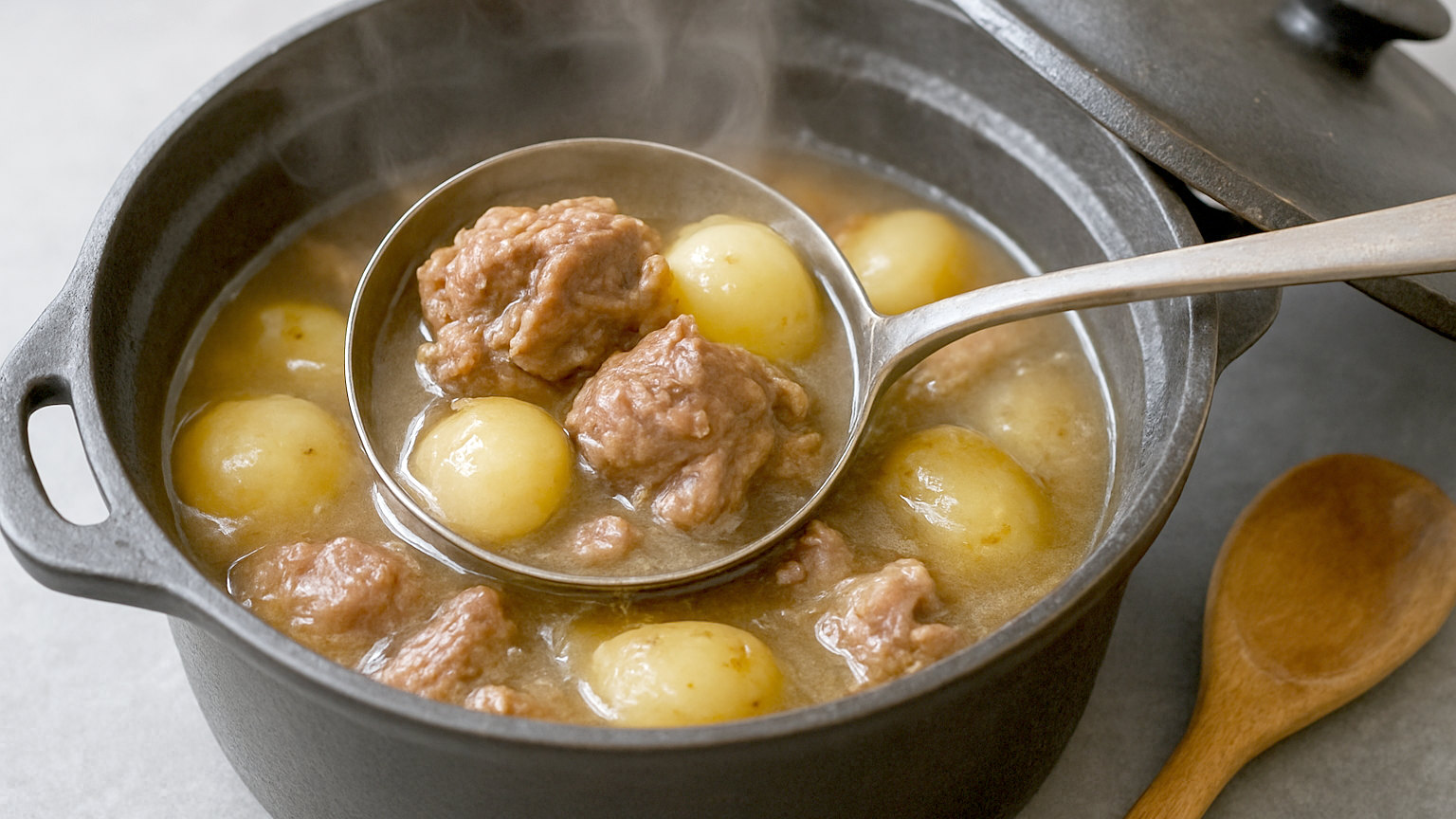
Irish stew is defined as much by what it leaves out as by what goes in. There is no browning, no stock and no tomato, and in the strictest version no carrot either. What you get is a pale, gentle stew where the potatoes break down and thicken the liquid, and the flavour comes almost entirely from the lamb and the long slow cooking.
What do you need for 6 people?
- 1.2kg lamb neck on the bone, or shoulder cut into large pieces
- 1.2kg floury potatoes, half sliced thickly and half left in large chunks
- 3 large onions, thickly sliced
- 4 sprigs of thyme and 2 bay leaves
- About 800ml water or light lamb stock
- Salt and plenty of black pepper
- Chopped parsley to finish
How do you make it?
- Heat the oven to 150C fan, 170C conventional, gas mark 3.
- Layer half the sliced potatoes in the base of a heavy casserole.
- Add the lamb, then the onions, seasoning each layer heavily.
- Tuck in the thyme and bay.
- Top with the remaining sliced potatoes and the chunks.
- Pour in enough water to come two thirds up the contents.
- Cover tightly and cook for 2 and a half to 3 hours.
- Scatter with parsley and check the seasoning before serving.
Do not brown the meat. This is the point at which most modern recipes depart from the original, and browning gives you a good lamb casserole rather than an Irish stew. The paleness is the dish.
Why two sizes of potato?
The thin slices at the bottom collapse completely and thicken the liquid, doing the job flour would do in another stew. The chunks on top hold their shape and are eaten as potatoes.
Use a floury variety such as Maris Piper or King Edward, since waxy potatoes will not break down.
Which cut of lamb?
Neck on the bone is traditional and gives the best flavour, since the bones enrich the liquid. Shoulder is the easier alternative.
Mutton is the historically correct meat and needs an extra hour. Avoid leg, which is too lean.
Should there be carrots?
This is the standing argument. The purist position is that Irish stew contains only lamb, potato, onion and water, and that carrots are a later addition.
Most cooks add them anyway and the stew is none the worse for it. Add them in the last hour so they keep some texture.
Why no stock?
The lamb bones and the long cooking create their own broth, and water lets that flavour come through cleanly. Stock makes it taste like a different dish.
If you are using boneless shoulder, a light lamb stock is a reasonable compromise.
How do you know it is ready?
The lamb should fall away from the bone and the bottom layer of potato should have dissolved into the liquid.
If it is still thin, lift out the meat and mash a few potatoes into the broth.
Is it the same as Lancashire hotpot?
They are close relatives. A hotpot has neatly arranged sliced potatoes on top that brown in an uncovered dish, while Irish stew is covered throughout and stays pale.
Hotpot also traditionally includes kidney and is browned at the end, both of which Irish stew avoids.
Can it be made ahead?
Yes, and it improves overnight. It keeps three days in the fridge and freezes for three months, though the potatoes soften further.
Skim the fat off the surface once chilled, which lifts away in a sheet.
What about pearl barley?
A handful added at the start thickens the broth and stretches the dish, and it is a common addition in Irish and Scottish cooking.
It is not part of the strict traditional recipe, where the potatoes do that job, but it is a sensible one on a cold day.
What should you serve with it?
Soda bread and butter, and nothing else. The potatoes are already in the pot.
Cool leftovers quickly, refrigerate within two hours and reheat once only until piping hot, in line with Food Standards Agency guidance.
See also Why Is My Stew Meat Tough?, or browse more Mains recipes.


