
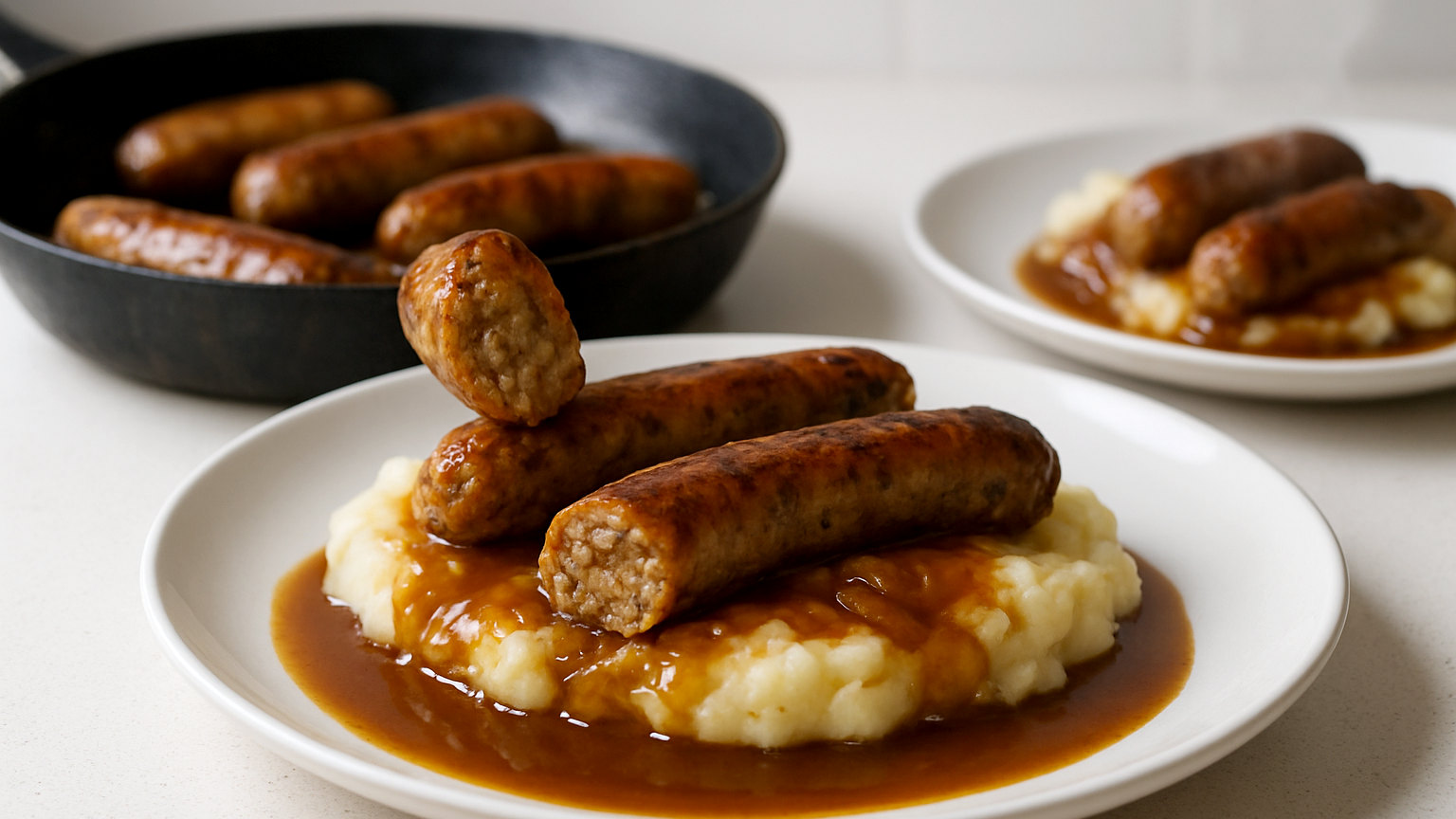
Meat free sausages have improved a great deal, and most complaints about them come from cooking them as though they were pork. They contain almost no fat, so they do not baste themselves, and they are already cooked in the sense that nothing inside them is raw. Both facts change how they should be handled.
How are they different to cook?
They release no fat, so the pan stays dry and they will stick and burn without added oil. They also cook faster, since there is no raw meat to bring up to temperature.
Use more oil than you think and less heat. A tablespoon in the pan and a medium heat for about 12 minutes is the general rule.
What are they made from?
The better ones use pea protein, soya protein or mycoprotein, which give a firmer, meatier texture. Cheaper ones are based on vegetables and breadcrumb and are softer.
Read the ingredients, since the difference in texture between the two types is considerable.
What are the timings?
- Pan: 10 to 12 minutes over a medium heat with oil, turning often
- Oven: 20 minutes at 190C fan, turned once
- Air fryer: 10 to 12 minutes at 180C
- Grill: 10 minutes, turning every few minutes, watching closely
Which dishes suit them?
Sausage casserole, bangers and mash, sausage rolls and sandwiches all work. Toad in the hole works too, though they contribute no fat to the tin so you need more dripping or oil.
They suit dishes with a strong sauce better than dishes where the sausage is the only flavour.
Do they work in a casserole?
Yes, with one adjustment. Brown them first and add them for the last fifteen minutes rather than simmering them for forty, since they soften and can fall apart.
Add extra beans or lentils for substance, since they release nothing into the sauce.
What are Glamorgan sausages?
A traditional Welsh vegetarian sausage made from Caerphilly cheese, leeks and breadcrumbs, bound with egg and rolled in more breadcrumbs before frying.
They predate modern meat substitutes by well over a century and are genuinely good in their own right rather than as an imitation.
How do you make them?
Combine 200g grated Caerphilly, 150g breadcrumbs, a finely chopped softened leek, a teaspoon of mustard and plenty of pepper, bound with one egg yolk.
Shape into sausages, chill for an hour, roll in beaten egg white and more breadcrumbs, and shallow fry for 8 minutes.
Are they healthier?
Generally lower in saturated fat than pork sausages, though many are high in salt, so the pack is worth reading rather than assuming.
The better ones are a reasonable source of protein and fibre, which meat sausages are not.
Do they need to reach a safe temperature?
They should be piping hot throughout, which is the general guidance for any reheated or cooked food. There is no raw meat concern.
Follow the pack instructions, since formulations vary considerably between brands.
Can they be cooked from frozen?
Most can, and the pack will say. Add about five minutes to the oven or air fryer time.
They handle freezing better than meat sausages, since there is less water to form ice crystals.
Why do they burn so easily?
With no fat of their own they rely entirely on the oil in the pan, and once that is absorbed the surface is in direct contact with hot metal.
Keep the heat moderate, add oil if the pan looks dry and turn them more often than you would a pork sausage.
Do they shrink?
Far less than meat sausages, since there is little fat or water to lose. What you see raw is close to what you get on the plate.
What should you serve with them?
Exactly what you would serve with meat sausages, with one check. Onion gravy usually contains beef stock and Worcestershire sauce, both of which need substituting.
Vegetable stock with a teaspoon of Marmite gives the same depth.
See also What Do You Serve With Sausages?, or browse more Mains recipes.


