
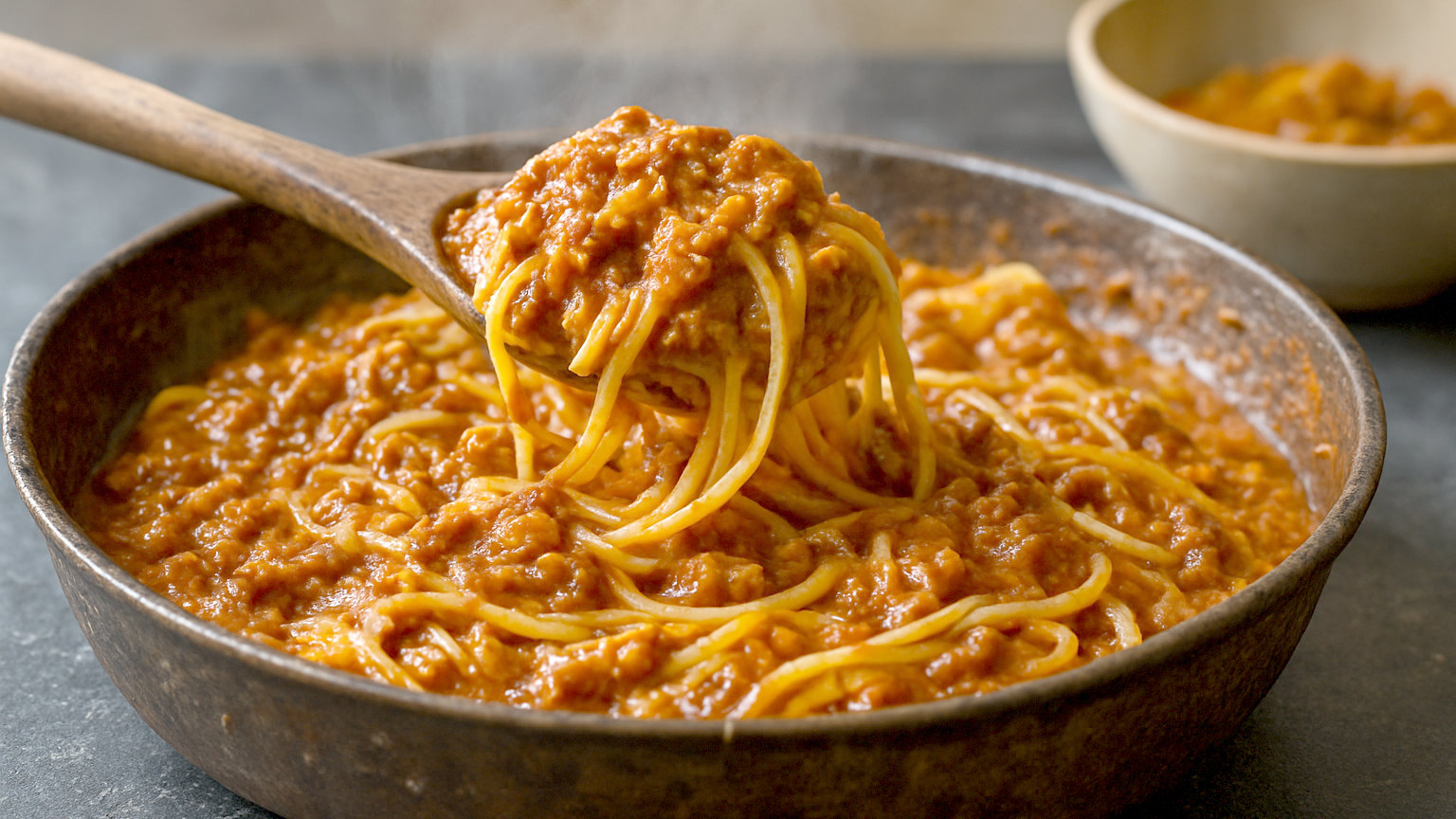
Spaghetti bolognese as cooked in Britain is not what they eat in Bologna, where a ragu is served with tagliatelle and contains no garlic. That is fine. It has been a British dish for seventy years and it deserves to be cooked properly on its own terms, which means a long simmer and the addition of milk rather than twenty minutes with a jar of sauce.
What do you need for 6 people?
- 500g beef mince and 250g pork mince
- 150g smoked bacon or pancetta, finely chopped
- 1 onion, 2 carrots and 2 sticks of celery, very finely chopped
- 3 cloves of garlic, crushed
- 2 tablespoons tomato puree
- 250ml whole milk
- 250ml red wine
- 2 tins of chopped tomatoes
- 300ml beef stock, 2 bay leaves and a pinch of nutmeg
- 600g spaghetti and parmesan to serve
How do you make it?
- Fry the bacon in a heavy pot until the fat runs, then add the chopped vegetables and cook for 15 minutes until very soft.
- Push them aside and brown the mince hard in batches in the same pot.
- Add the garlic and tomato puree and cook until the puree darkens.
- Pour in the milk and simmer until it has almost all been absorbed, about 10 minutes.
- Add the wine and let it reduce by half.
- Add the tomatoes, stock, bay and nutmeg.
- Simmer very gently, part covered, for 2 hours, stirring occasionally.
- Season at the end and serve with spaghetti and grated parmesan.
The milk goes in before the wine and tomatoes. It tenderises the meat and softens the acidity of what follows, and it is the step almost every British recipe leaves out. Add it while the pot is still relatively dry so it can be absorbed.
Why two kinds of mince?
Pork brings fat and sweetness that beef alone lacks, and the combination gives a rounder sauce. All beef works but is noticeably leaner in character.
Use beef mince with at least 15 per cent fat if you are using it alone.
How finely should the vegetables be chopped?
Very finely, so they dissolve into the sauce over two hours rather than remaining as identifiable pieces.
A food processor pulsed briefly does the job, though it can turn them to mush if run too long.
How long does it really need?
Two hours minimum, and three is better. This is the difference between a sauce that tastes of separate ingredients and one that tastes of itself.
It can also go into a low oven at 150C fan, which needs no stirring.
Should it be served with spaghetti?
In Bologna, no, since a heavy sauce slides off thin strands. Tagliatelle, pappardelle or rigatoni all hold it better.
Spaghetti is what most British households use and there is no need to apologise for it.
Can it be made ahead or frozen?
It improves overnight and keeps three days in the fridge. It freezes for three months and is one of the most useful things to batch cook.
Freeze it in portions, since a large block is no help on a weeknight.
Should the pasta be dressed in the sauce?
Yes. Drain the spaghetti a minute early, tip it into the pan with a ladle of the sauce and a splash of cooking water, and toss for a minute.
Serving a naked pile of pasta with sauce dumped on top is the most common British habit and the easiest one to improve on.
Why keep the pasta water?
It is starchy and salty, and a few tablespoons help the sauce cling to the strands rather than sliding off into the bottom of the bowl.
What else can it be used for?
Lasagne, a baked pasta dish, or spooned over a jacket potato. A double batch is barely more work than a single one.
Cool leftovers quickly, refrigerate within two hours and reheat once only until piping hot, in line with Food Standards Agency guidance.
For something along the same lines, see Chilli Con Carne, or browse all our Mains recipes.


