
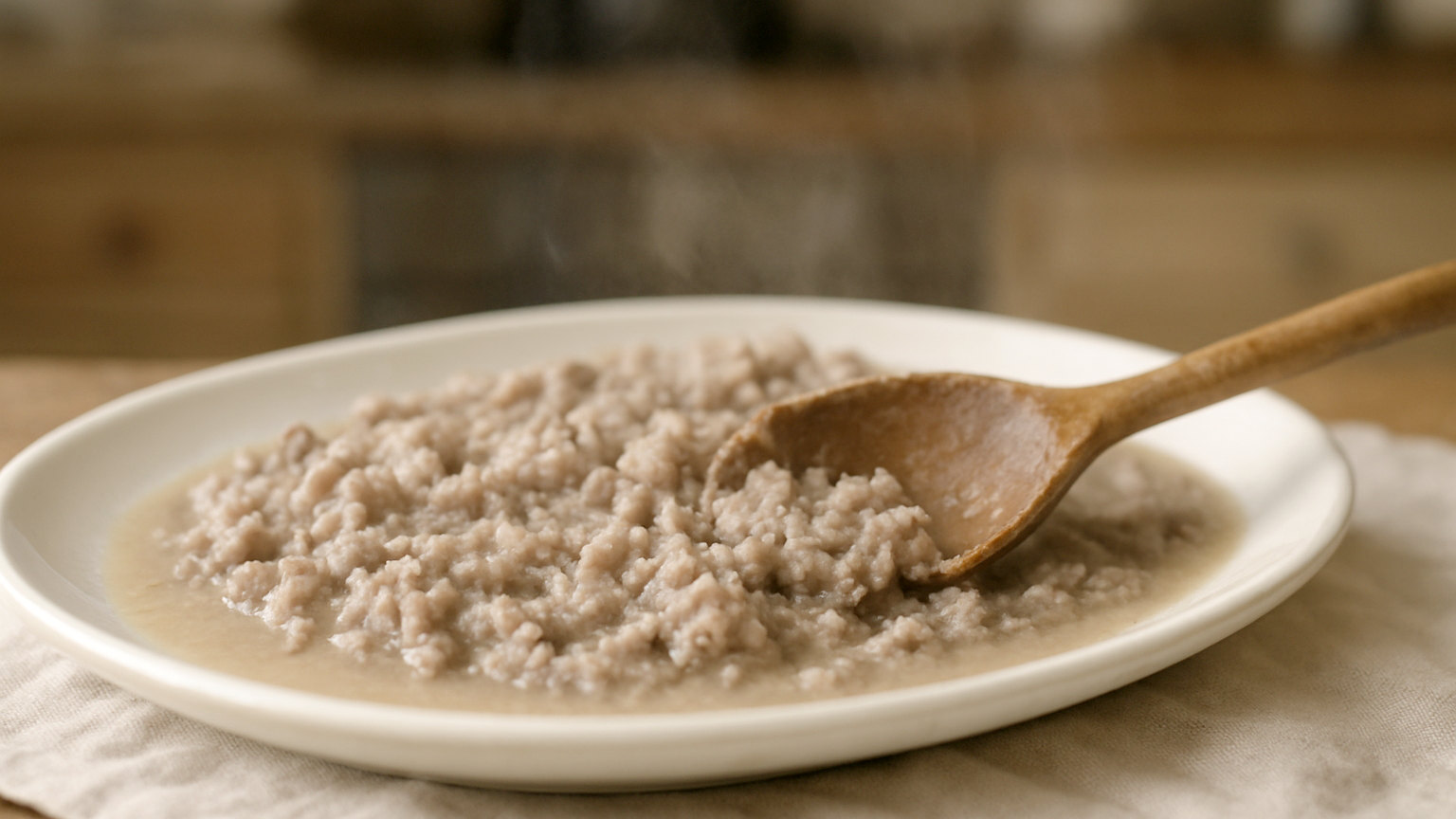
Grey watery mince is not a sign that anything has gone wrong with the meat. It means the mince has been boiled rather than fried, which happens whenever the water it releases cannot evaporate fast enough. There are four usual causes, they often occur together, and all of them are avoidable without any special equipment.
Was the pan hot enough?
This is the most common cause. The pan and the fat should be properly hot before the mince goes anywhere near, and the meat should hiss loudly on contact.
A cold start means the water comes out before the surface can seal, and from that point the mince is simmering in its own liquid.
Was there too much in the pan?
Half a kilo of mince in a medium pan will always go grey. Each addition of cold meat drops the pan temperature further, and once it falls below the point where water evaporates, browning stops entirely.
Cook in batches of about 350g in the widest pan you have.
Was it stirred too much?
Constant stirring keeps bringing cooler meat into contact with the pan and breaks up any crust that is forming.
Leave it undisturbed for two minutes at a time. It will look wrong for the first ninety seconds and then start to colour.
Was the mince frozen or defrosted?
Defrosted mince holds far more water than fresh, and it often sits in a pool of liquid in the packet. Drain it and pat it dry with kitchen paper first.
Never cook mince from frozen in a pan, since it releases water faster than any domestic hob can drive off.
Was it very lean?
Five per cent mince has little fat to conduct heat and browns poorly. Add a tablespoon of oil to compensate.
Fifteen to twenty per cent mince browns far more readily and most of the excess fat can be drained afterwards.
Did the onions go in first?
Onions release a great deal of water and will prevent the mince browning if they are in the pan at the same time.
Brown the meat first, set it aside, then cook the vegetables in the same pan.
Can a grey pan be rescued?
Partly. Raise the heat and let the liquid boil off completely, then keep cooking. Once the pan is dry the mince will begin to brown, though it will never match a proper start.
This takes five to ten minutes and is worth the wait rather than pressing on with the recipe.
Does it matter if the dish simmers for hours?
Yes. Browning creates flavour compounds that a long simmer cannot produce, so an unbrowned bolognese tastes flat however long it cooks.
It is the single biggest difference between a good mince dish and an ordinary one.
Does the packaging cause it?
Mince in a sealed pack often looks brown or grey on the inside and red on the outside, which is an oxygen effect rather than a sign of age.
That colour has nothing to do with how it browns in the pan. Check the date rather than the colour.
Is grey mince unsafe?
No, provided it is cooked through and piping hot. Colour is a cooking issue rather than a safety one.
Mince should be cooked thoroughly with no pink meat, in line with Food Standards Agency guidance, because mincing spreads surface bacteria through the whole batch.
Does the pan material matter?
Yes. Non stick pans are usually not safe above a certain temperature and do not hold heat well, so they struggle to brown mince properly.
Stainless steel or cast iron holds far more heat and recovers faster when cold meat goes in, which is the whole problem.
Is the liquid worth keeping?
If you have boiled the mince by accident, the liquid contains flavour. Reduce it right down rather than pouring it away, then carry on browning.
What is the quickest fix?
A wider pan and two batches. Those two changes alone solve the problem in most kitchens, and neither costs anything.
Worth reading next: How Much Mince Per Person?. There is more in our Mains recipes.


