
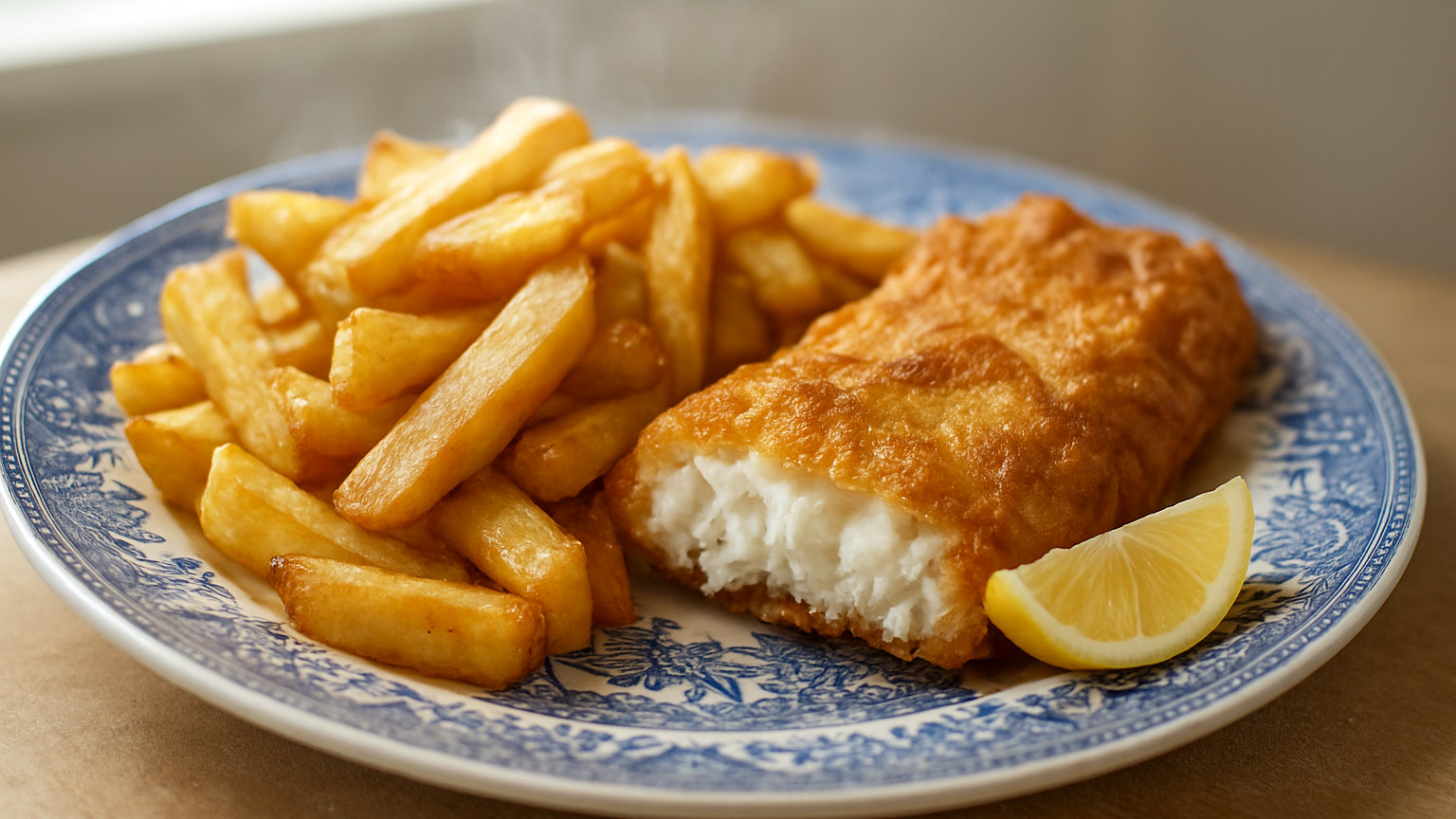
Triple cooked chips take the best part of a day, most of which is waiting, and they produce a chip with a glassy shattering shell and a fluffy interior. The method sounds fussy and each stage does a specific job. The chilling periods between them are not padding: they dry the surface, and a dry surface is what crisps.
What do you need for 4 people?
- 1.5kg Maris Piper or King Edward potatoes
- 2 litres sunflower or rapeseed oil, or beef dripping
- Flaky salt
How do you make them?
- Peel the potatoes and cut them into chips about 1.5cm thick.
- Rinse under cold water until it runs clear, which removes surface starch.
- Simmer in salted water for 20 to 25 minutes until on the point of falling apart.
- Drain very carefully and lay on a rack. Chill uncovered for at least an hour.
- Fry at 130C for 5 to 7 minutes until a dry crust forms with no colour.
- Drain on a rack and chill again for at least an hour.
- Fry at 180C for 5 to 7 minutes until deep golden.
- Drain, season heavily with flaky salt and serve immediately.
The chips must be almost falling apart after the simmer. Cracks and rough edges are what create the surface area for the shell, so undercooking at this stage gives smooth, ordinary chips.
Why chill between stages?
The fridge dries the surface, and each frying drives out more moisture. Water in the chip turns to steam and prevents crisping.
An hour is the minimum and overnight is better. This is why the method is spread across a day.
Why two different oil temperatures?
The first fry at 130C cooks the chip through and forms a dry crust without colouring it. The second at 180C browns and crisps that crust.
A single frying cannot do both, which is why ordinary chips are either pale and soft or dark and undercooked inside.
Which potatoes should you use?
Floury varieties. Maris Piper is the standard and King Edward is at least as good. Desiree also works.
Waxy salad potatoes will not fluff up inside and cannot make a good chip.
Why rinse the starch off?
Surface starch causes the chips to stick together and brown unevenly. Rinsing until the water runs clear takes a minute.
How thick should they be?
Around 1.5cm for a chip shop chip. Thinner chips are all shell and no interior; thicker ones do not cook through evenly.
Keep them even, since mixed sizes cook at different rates.
Can they be made ahead?
That is the practical advantage. Do everything up to the second fry a day ahead, keep them chilled, and the final frying takes seven minutes.
They also freeze after the first fry, and go straight from frozen into the hot oil.
Do they need a deep fryer?
A heavy deep pan and a thermometer work perfectly well, and most home cooks use those. A dedicated fryer holds temperature better and is safer.
Whichever you use, never fill it more than a third full.
Can you use an air fryer?
For the final stage, yes. Toss the chilled first fried chips in a tablespoon of oil and cook at 200C for 15 minutes.
They will be good rather than glassy, since an air fryer cannot reproduce the immersion in hot oil.
Why are they soggy?
Almost always moisture. Either the chips were not chilled between stages, or the oil was not hot enough, or the pan was overcrowded and the temperature dropped.
Fry in small batches and let the oil come back to temperature between each one.
Should they be salted before or after?
After, immediately as they come out of the oil while the surface is still hot enough for the salt to stick.
Salting before frying draws moisture to the surface and works against the crust.
Is the oil reusable?
Yes, three or four times. Cool it, strain it through a fine sieve and keep it in a sealed container away from light.
Discard it once it darkens noticeably or smells stale.
See also How to Tell When Fish Is Cooked, or browse more Mains recipes.


