
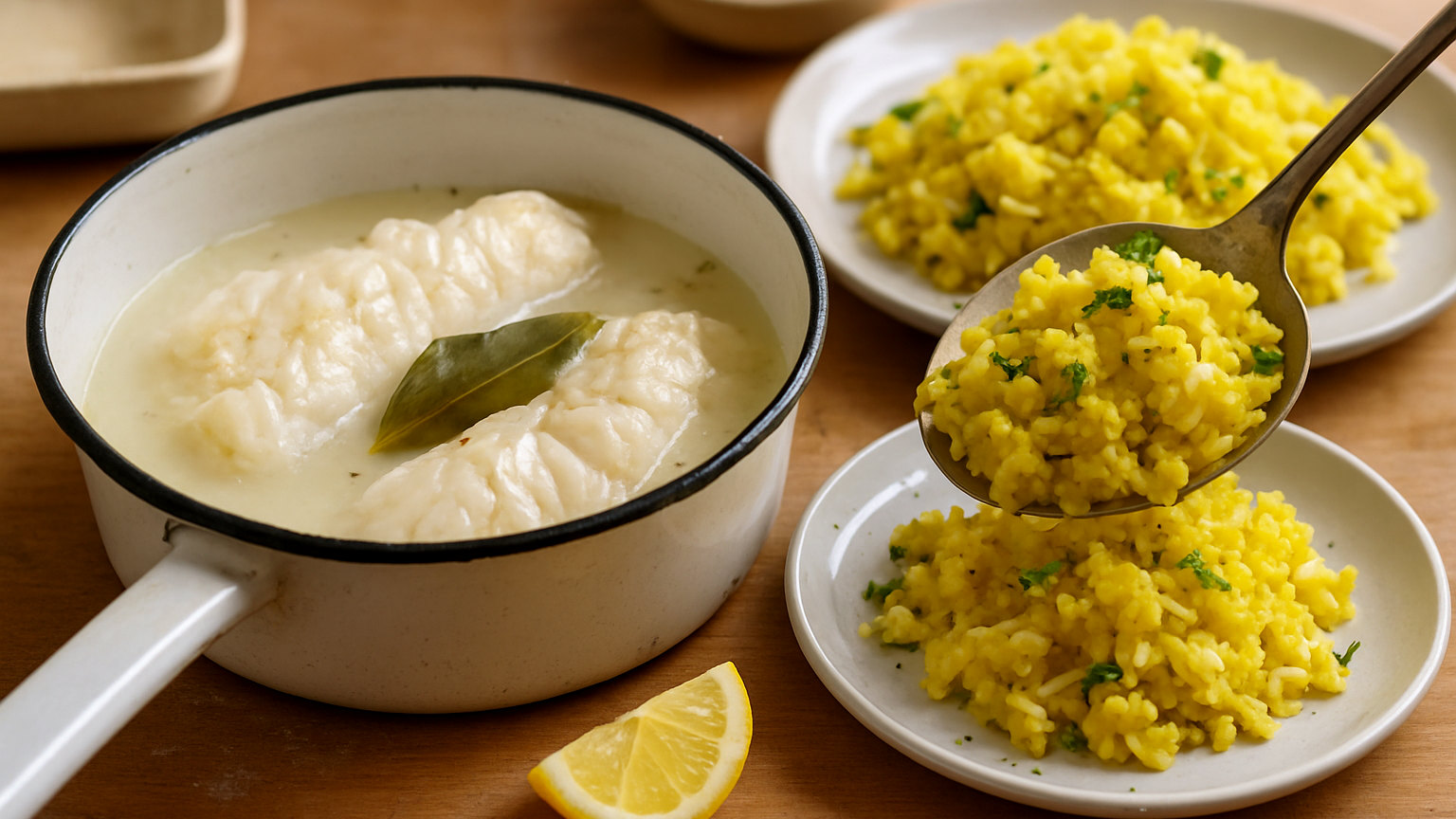
Kedgeree came back from India with the Victorians and settled into the British breakfast table, though it makes far more sense as a supper. It is rice, smoked fish, eggs and mild spice, and the way it goes wrong is texture. Stirred too much it becomes a claggy mass, so the fish goes in at the end in large flakes and the rice is folded rather than beaten.
What do you need for 4 people?
- 400g undyed smoked haddock
- 500ml whole milk, with a bay leaf and peppercorns
- 300g basmati rice
- 1 onion, finely chopped
- 50g butter
- 1 tablespoon medium curry powder and 1 teaspoon turmeric
- 4 cardamom pods and 1 cinnamon stick
- 4 eggs, soft boiled and quartered
- A large handful of coriander or parsley, chopped
- 1 lemon and 3 tablespoons double cream, optional
How do you make it?
- Poach the haddock in the milk with the bay and peppercorns for 5 minutes, then lift out and flake into large pieces.
- Rinse the rice until the water runs clear.
- Melt the butter and soften the onion for 10 minutes with the cardamom and cinnamon.
- Add the curry powder and turmeric and cook for 1 minute.
- Stir in the rice to coat, then add 550ml of water and a pinch of salt.
- Cover tightly and cook on the lowest heat for 12 minutes, then rest off the heat for 10 minutes without lifting the lid.
- Fork through the fish, cream and herbs gently.
- Top with the quartered eggs and serve with lemon wedges.
Fold the fish in with a fork rather than stirring. The point of kedgeree is distinct grains of rice and large flakes of haddock, and vigorous stirring breaks both down into a uniform paste.
Why rinse the rice?
It removes surface starch, which is what makes rice sticky. Rinsing until the water runs clear takes a minute and is the difference between separate grains and a clump.
Basmati is the right rice here, since it is long grained and stays distinct.
Should the rice rest?
Yes, and the lid stays on. Ten minutes off the heat lets the grains finish absorbing and firm up, and lifting the lid early releases the steam that does it.
How should the eggs be cooked?
Six and a half minutes in boiling water gives a set white and a slightly soft yolk, which is right for this. Cool them in cold water and peel carefully.
Hard boiled eggs are traditional and equally correct, and easier to quarter neatly.
Can you use the poaching milk?
Not in the rice, since it makes it heavy and can catch. Keep it for a fish sauce or a chowder, or discard it.
Cook the rice in water or a light stock instead.
Should it be served hot or warm?
Warm rather than piping hot, which is how it was traditionally eaten from a breakfast sideboard. The flavours are clearer at that temperature.
What other fish work?
Hot smoked salmon or smoked mackerel both work and need no poaching at all, just flaking in at the end.
Fresh salmon poached in the same way is a milder alternative.
How spiced should it be?
Mildly. This is an Anglo Indian dish and the spice supports the smoked fish rather than competing with it.
A tablespoon of medium curry powder for four people is plenty.
Why is it a breakfast dish?
It arrived with returning colonial households in the nineteenth century and fitted the Victorian breakfast sideboard, which was substantial and served at room temperature.
The original Indian khichri is a plain rice and lentil dish, and the fish and eggs are the British addition.
Can it be made ahead?
It is best fresh, though it reheats acceptably in a covered dish with a splash of milk.
Cool leftovers quickly, refrigerate within two hours and reheat once only until piping hot. Take particular care with rice, which should be cooled and refrigerated within an hour, in line with Food Standards Agency guidance.
Worth reading next: Smoked Haddock With a Poached Egg. There is more in our Mains recipes.


