
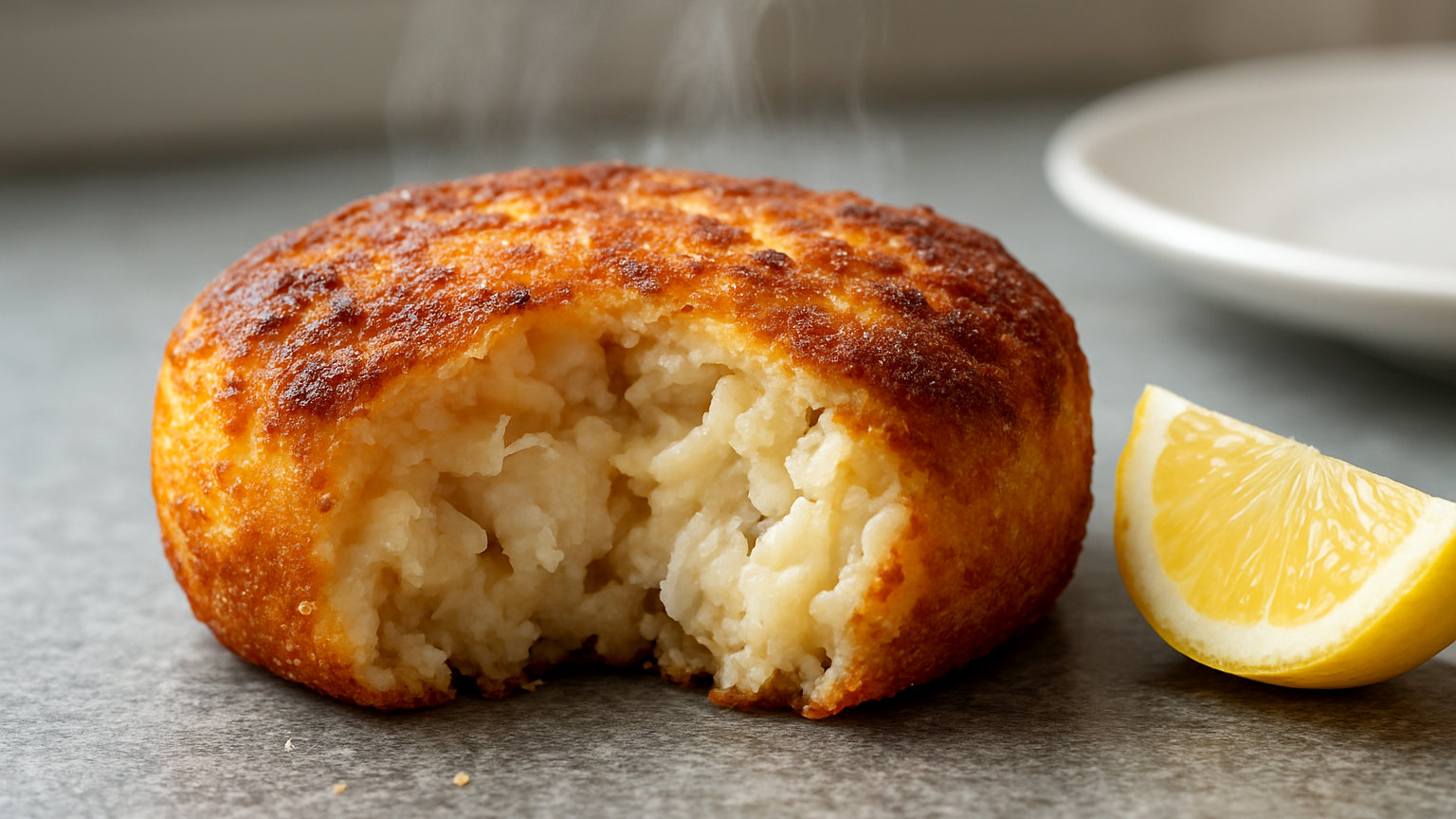
Fish cakes are a good use of leftover fish and a genuinely good dish in their own right, and they fail in one predictable way. The mixture is too wet, so they slump in the pan and break when turned. Almost everything in this method is about removing moisture, and the chilling stage at the end is not optional.
What do you need for 8 fish cakes?
- 500g floury potatoes, peeled and cut into chunks
- 400g fish, a mixture of smoked haddock, salmon and white fish
- 300ml milk with a bay leaf, for poaching
- 25g butter
- 3 spring onions, finely chopped
- 2 tablespoons chopped parsley and 1 tablespoon capers
- Zest of 1 lemon and 1 teaspoon English mustard
- 2 eggs, beaten, and 150g dried breadcrumbs, plus flour for coating
- Oil for shallow frying
How do you make them?
- Boil the potatoes until tender, drain thoroughly and leave to steam dry for 5 minutes.
- Mash them with the butter and no milk at all, then spread out to cool completely.
- Poach the fish in the milk for 5 minutes, then drain and flake into large pieces.
- Fold the fish, spring onions, herbs, capers, lemon zest and mustard into the cold mash.
- Season well and shape into 8 cakes about 2cm thick.
- Chill for at least an hour, or overnight.
- Coat each in flour, then beaten egg, then breadcrumbs.
- Shallow fry over a medium heat for 4 minutes a side until golden.
Use no milk in the mash at all. Fish cake mash needs to be as dry as possible, and the butter provides all the richness required. Ordinary creamy mash makes a mixture that will not hold together.
Why chill them?
The starch firms up and the cakes hold their shape when they meet the hot pan. An hour is the minimum and overnight is better.
Skipping this is the second most common reason they fall apart.
Why keep the fish in large flakes?
So you can taste it. A fish cake where everything has been mashed together tastes of potato with a faint background of fish.
Fold gently with a spatula rather than beating the mixture.
Can you add other things?
Sweetcorn, peas, chopped dill or a little grated cheddar all work. Curry powder makes a good variation and suits white fish particularly.
Keep additions dry and modest, since the mixture is already at the limit of what will hold together.
Which fish should you use?
A mixture is best. Smoked haddock for depth, salmon for richness and colour, and white fish for bulk.
Leftover cooked fish works perfectly and skips the poaching entirely.
Do they need a breadcrumb coating?
It gives a crisp shell and holds them together, so it is worth the extra step. Dried breadcrumbs or panko both work.
A simple dusting of flour is the quicker option and gives a lighter crust.
Can they be baked instead?
Yes, at 200C fan for 20 minutes, turning once, on an oiled tray. They will be less crisp but considerably less greasy.
An air fryer at 190C for 12 minutes gives the best compromise.
Can they be made ahead or frozen?
Shape and coat them a day ahead and keep them chilled. They freeze raw for three months, open frozen on a tray then bagged.
Cook from frozen at 190C fan for about 30 minutes rather than frying.
Why do they fall apart?
Wet mash, not enough chilling, or a pan that was not hot enough when they went in. All three are fixed before the cakes reach the heat.
An egg yolk added to the mixture helps bind it if your potatoes were unavoidably damp.
How thick should they be?
About 2cm, which lets them heat through in the four minutes a side the coating needs. Thicker cakes are still cold in the middle when the crust is done.
What should you serve with them?
Tartare sauce, a wedge of lemon and buttered greens or a sharp salad. Poached egg on top makes it a more substantial meal.
Cool leftovers quickly, refrigerate within two hours and use within two days, in line with Food Standards Agency guidance.
For something along the same lines, see Why Does My Fish Stick to the Pan?, or browse all our Mains recipes.


