
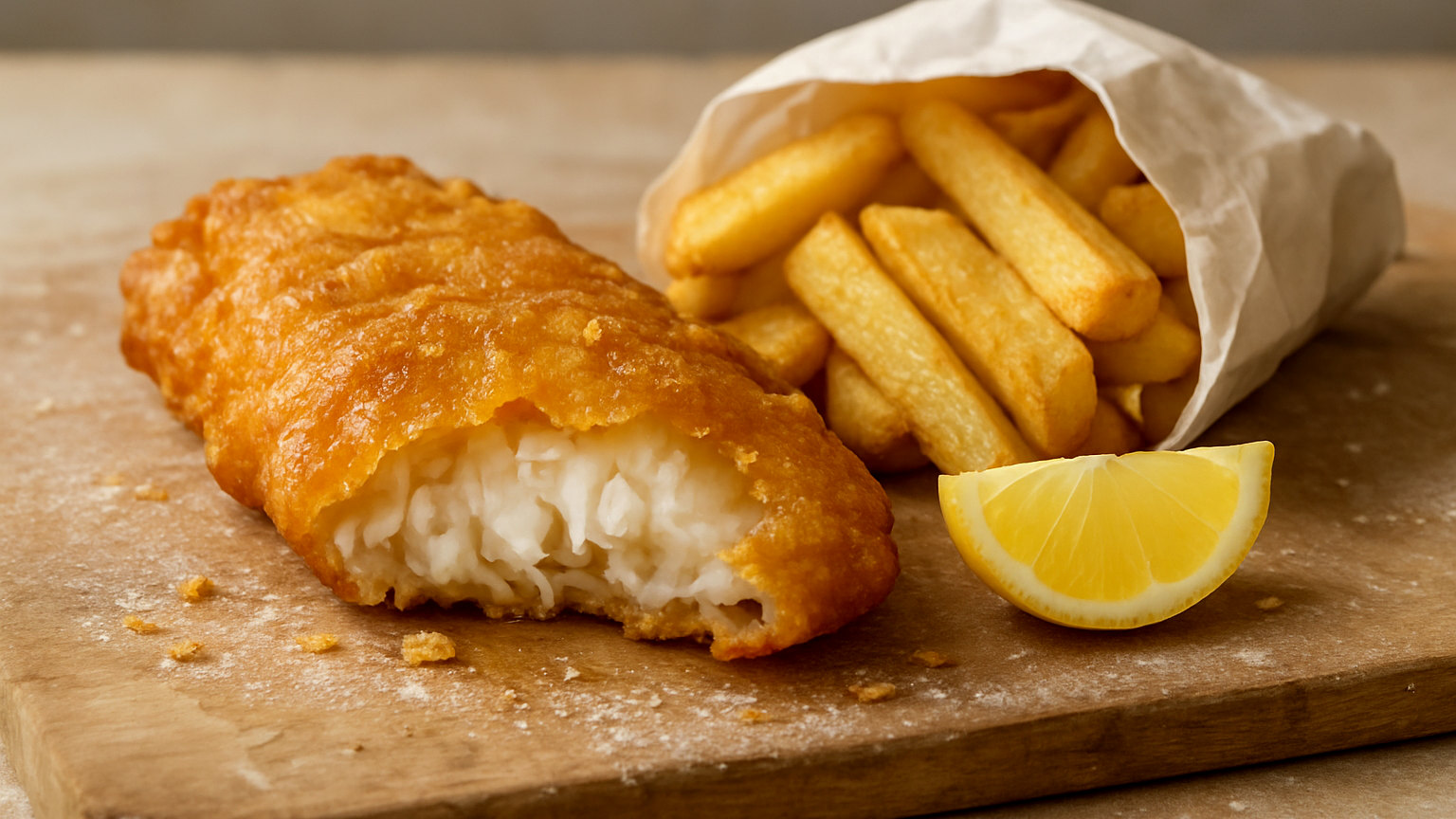
Fish and chips made at home is a genuine project rather than a weeknight dinner, and the two things that decide whether it works are temperature and moisture. The batter must be cold, the oil must be hot, and the fish must be dry. Get those right and the rest is fairly forgiving. Get them wrong and you have soggy batter sliding off pale fish.
What do you need for 4 people?
- 4 skinless cod or haddock fillets, about 180g each
- 200g plain flour, plus 3 tablespoons for dusting
- 50g cornflour
- 1 teaspoon baking powder
- 330ml very cold beer, a lager or a bitter
- 1 teaspoon salt
- 1.5kg Maris Piper potatoes for the chips
- 2 litres sunflower or rapeseed oil for frying
How do you make it?
- Cut the potatoes into chips and cook them through first, following the triple cooking method.
- Pat the fish completely dry with kitchen paper and dust it in seasoned flour.
- Whisk the flour, cornflour, baking powder and salt in a bowl.
- Pour in the cold beer and whisk briefly, leaving small lumps.
- Heat the oil to 180C, checking with a thermometer.
- Dip each fillet into the batter, let the excess run off and lower it into the oil away from you.
- Fry for 6 to 8 minutes until deep golden, turning once.
- Drain on a rack rather than kitchen paper.
Mix the batter at the last moment and leave it lumpy. Overworking develops the gluten and gives a tough, bready coating, and a batter left to stand loses the bubbles that make it light.
Why does the batter need to be cold?
The contrast between cold batter and hot oil creates steam instantly, which puffs the coating up and keeps it separate from the fish.
Use beer straight from the fridge, and keep the bowl in the fridge until the oil is at temperature.
Why beer rather than water?
The carbonation adds bubbles and the alcohol evaporates faster than water, so the batter dries and crisps more quickly.
Sparkling water works nearly as well. Flat beer is no better than water.
What does the cornflour do?
It contains no gluten, so it lightens the batter and makes it crisper. A quarter of the total flour weight is about right.
Baking powder adds a little extra lift and is worth including.
Why dust the fish in flour first?
Wet fish and batter do not stick together. A thin coating of dry flour gives the batter something to grip, which is why it slides off otherwise.
Pat the fish dry before flouring, since flour on a wet surface turns to paste.
What oil temperature do you need?
180C. Below 170C the batter absorbs oil and goes greasy. Above 190C it browns before the fish is cooked.
A thermometer is worth the small cost, since guessing is the main reason home frying disappoints.
Which fish should you use?
Cod or haddock are traditional. Pollock and coley are cheaper, sustainable and perfectly good battered.
Thick fillets from the head end hold together better than thin tail pieces.
What oil should you use?
Sunflower, rapeseed or groundnut, all of which have high smoke points and no strong flavour. Beef dripping is the traditional chip shop choice and gives a better taste.
Never use olive oil, which burns at frying temperatures and is expensive enough to make the whole exercise absurd.
How do you fry safely?
Fill the pan no more than a third full, never leave it unattended, and lower the fish in away from you rather than dropping it.
Keep a lid nearby. Never put water on an oil fire.
How do you keep it all hot?
Fry the fish last and keep the chips warm on a rack in a low oven. Never cover anything with foil, which softens the coating within minutes.
What should you serve with it?
Chips, mushy peas, tartare sauce and malt vinegar. A wedge of lemon and plenty of salt.
Cool leftovers quickly, refrigerate within two hours and use within two days, in line with Food Standards Agency guidance.
For something along the same lines, see Which White Fish Should You Buy?, or browse all our Mains recipes.


